

If you’re gearing up for the new school year and already feeling the back-to-school dread, I hope this collection of engaging secondary art projects helps lighten your planning load. These ten classroom-tested art lessons have become reliable favorites with my high school students. I try to create fun, skill building projects that have students practice technique along with their personal voice. While I currently teach high school, each one is easily adaptable for middle school art classes too.
From expressive clay portraits, bold abstract architecture paintings, thoughtful monochromatic pet portraits and imaginative Surrealism collages, this collection offers a wide range of approaches. Most are 2D-based, but I’ve included my favorite clay art lesson to bring in some hands-on exploration.
If you are looking for some tried and true 3D lessons, here is a post about my favorite sculpture lessons:
In this post, you’ll find tons of student examples, free video tutorials, and classroom ready materials for every project. I’ve also included affiliate links to art supplies I genuinely use and recommend, they help support my ability to share these resources for free. Whether you’re teaching in person, remotely, or somewhere in between, I hope these lessons inspire your students as much as they’ve inspired mine!
Expressive Clay Portrait

If you’re looking for a standout secondary clay project, this expressive clay portrait lesson is my all-time favorite! It teaches students the basics of working with clay while encouraging them to explore facial features and emotional expression. The project is incredibly versatile, with plenty of artistic inspiration to spark creativity, and it’s also budget-friendly since it requires only a small amount of clay per student.
Year after year, students consistently tell me this is their favorite project.
Abstract Architecture Painting

Acrylic paint is incredibly versatile and fun, but can feel intimidating to students at first. I love using this abstract architecture painting project because it breaks down painting concepts into simple steps while encouraging creative freedom. There are no limits on color or texture, students embrace a “let what happens, happen” mindset that helps build confidence. As their backgrounds dry, they research architecture from places that inspire them, whether it’s a dream travel destination, their hometown, or somewhere they’ve never been. This personal connection adds meaning and motivation throughout the process.
I also love that we break all of the rules of perspective and form. Sorry, Art I teachers!
Monochromatic Pet Portrait

Monochromatic pet portraits are a great way to introduce students to painting fundamentals while letting them connect personally with their subject. Focusing on pets brings joy and motivation, and the project helps students practice realism through careful blending of value and color-all within a limited, cohesive palette. This year I had students creat their own black neutral. It was such a great way to level up their painting skills! Did they complain they couldn’t use tubed black? Of course.
This is not only a color theory powerhouse, the personal connections students have with their pets (or just random animals!) made it a major crowd pleaser.
Surrealism Dream Collage


Collage is a fantastic technique for fostering creativity and embracing chance, especially in classrooms of all levels. Because students work with found images and materials, they can focus on expressing ideas without needing strong drawing skills, perfect for those who feel unsure about their technical abilities. I kick off the unit by exploring iconic Surrealist works like Salvador Dalí’s The Persistence of Memory, then dive deeper into the Dada movement with artists like Hannah Höch. This leads naturally into creating dream landscape collages that encourage imagination and personal expression.
These get delightfully weird, and if you get enough magazines donated it costs almost zero dollars to teach.
Contour Drawing Mixed Media

This mixed media contour portrait project builds on observation skills while giving students room to explore color and personal style. Midway through, we take a break from drawing to create watercolor and salt backgrounds, which adds texture and gives eyes a rest from close observation. Once dry, students cut out their favorite contour drawings and arrange them into expressive collages—focusing on emotion, storytelling, or simply their best work. We finish by sealing the drawings with Mod Podge, then add final details to unify the composition.
I have done this lesson successfully with 6th graders (you can also do styrofoam printmaking with the drawings!) and have also used it as a jumping off point in my AP Studio Art & Design course.
India Ink Landscape


This minimalist India ink landscape lesson is a simple yet powerful way to explore depth and space through value. Using just ink and brushes, students create stunning landscapes that feel atmospheric and expressive. Inspired by traditional Japanese ink paintings, this project encourages thoughtful mark-making while keeping materials minimal and accessible. My students loved the process and were surprised by how much visual impact they could achieve with such a limited palette.
I also love having students look at Japanese landscapes. We do a weekly art history warm-up routine and I love the discussions they create.
Abstract Colored Pencil Artwork

This artwork uses colored pencils to focus on color temperature, creating compositions with homemade stencils that explore positive and negative space to organize warm and cool color schemes. While this lesson centers on color theory fundamentals, students always find ways to let their individual styles shine through.
This is a great foundational artwork, and I have used cheap Crayola colored pencils and splurged on Prismacolor with very consistent results.
India Ink Nest
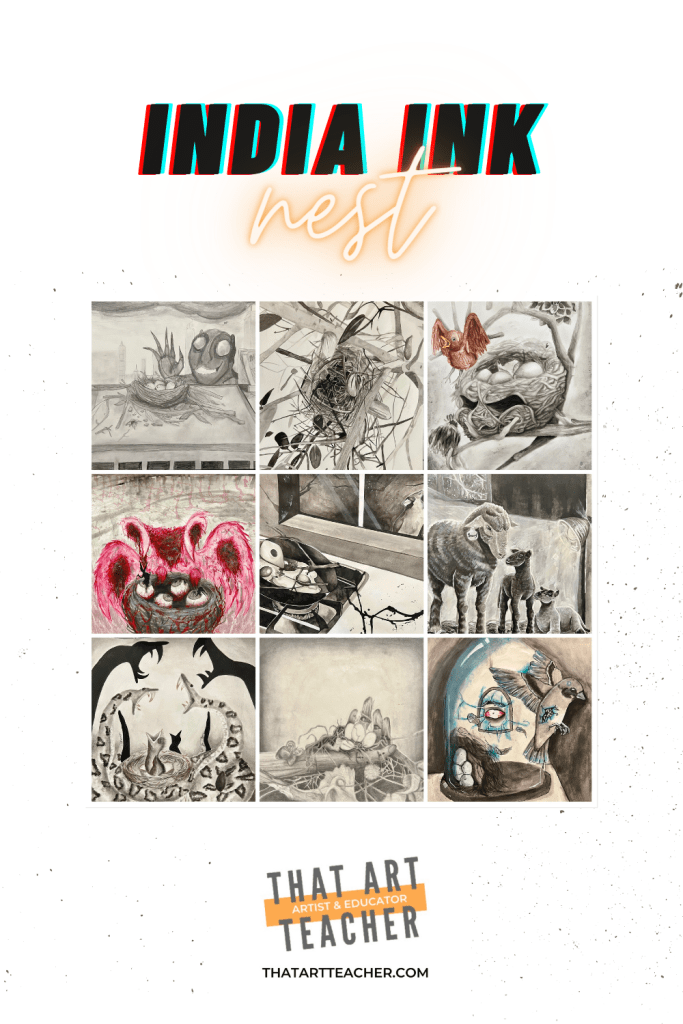
India ink is always a hit with my students thanks to its bold, dramatic look and the wide range of techniques it allows. From controlled line work to expressive splatters, this medium invites experimentation and creativity. One of my favorite projects using it is an ink nest artwork that explores value, contrast, composition, and symbolism, resulting in visually striking pieces with personal meaning.
Linocut Printmaking Inspired by a Memory

Linocuts are a favorite in my classroom because they combine strong design principles with personal expression. Students are drawn to the hands-on nature of carving, and there’s always a spark of excitement when they pull their first print. This particular memory linocut project helps students explore line and shape while reflecting on meaningful experiences. The process keeps them engaged, and the results are often surprisingly beautiful, making it a high-impact lesson both creatively and emotionally.
Observational Hand Contour Drawing

Hands make an ideal subject for student artists because they’re accessible, expressive, and full of potential for storytelling. In this hand contour drawing unit, students are challenged to observe closely and build foundational drawing skills while learning to communicate emotion, mood, and meaning. While many are initially intimidated by the idea of drawing hands from life, guided practice and steady encouragement help them grow in both skill and confidence. It’s a tough subject, but one that truly empowers students to find and strengthen their artistic voice.
Well, there they are! My top 10 engaging art projects for secondary classrooms
I hope these lessons give you a strong start to the school year and take a little pressure off your planning. Whether you’re introducing new techniques or revisiting foundational skills, these projects offer flexibility, engagement, and plenty of room for student creativity! Feel free to explore, adapt, and make them your own, I’m always cheering you on from my own classroom.

